
How Should You Workout With An Injury
Getting injured can feel frustrating.
One day you are making progress. The next day your shoulder hurts, your knee feels irritated, or your back starts acting up. Suddenly you are wondering if you should stop training completely.
That is when people start asking this question. How Should You Workout With An Injury
Most people think there are only two options.
Either push through the pain or stop exercising altogether.
Neither approach usually works well long term.
The truth is, the answer to How Should You Workout With An Injury is usually somewhere in the middle. In many cases, you can continue training safely if you adjust your workouts properly and focus on movements that support recovery instead of making things worse.
At AB Fitness Personal Training, we work with people dealing with injuries and limitations every day. The goal is not to ignore pain. The goal is to train smarter, improve movement, and keep your body strong without aggravating the issue.
This article will explain how to approach workouts when injured, what mistakes to avoid, and how to continue making progress safely.
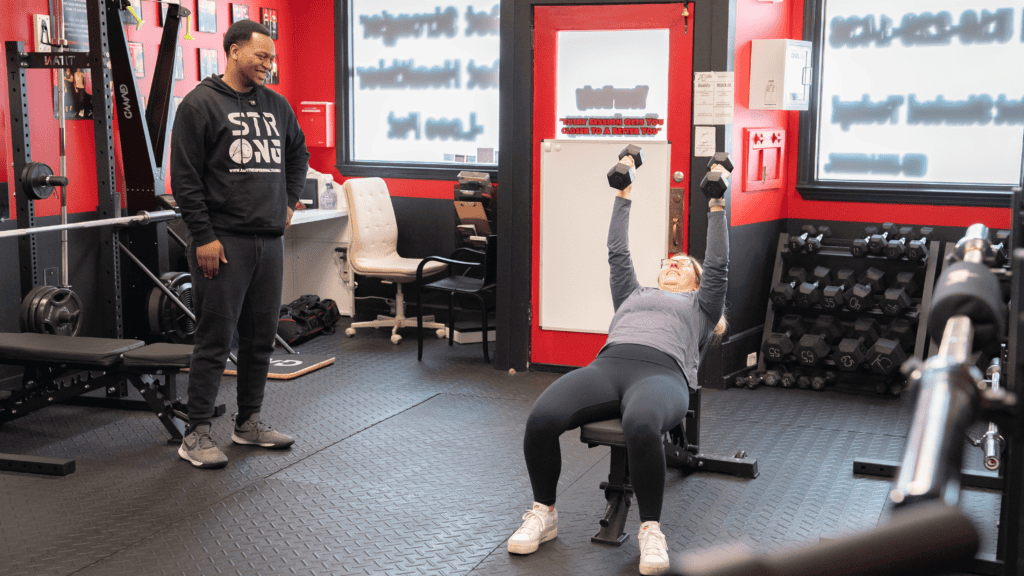
How Should You Workout With An Injury Without Making It Worse
This is the biggest fear most people have.
They worry that training will make the injury worse.
Sometimes that fear causes people to stop moving completely.
The problem is that complete rest often leads to:
• Weakness
• Stiffness
• Loss of stability
• Reduced confidence in movement
In many cases, the body actually benefits from controlled movement and structured strength training.
That is why understanding How Should You Workout With An Injury is so important.
The goal is not to stop moving.
The goal is to move intelligently.
The First Step Is Understanding the Injury
Not all injuries are the same.
Some injuries require complete rest temporarily. Others improve with movement and strengthening.
Common issues people deal with include:
• Knee pain
• Back pain
• Shoulder irritation
• Elbow pain
• Hip tightness
This is why there is no one size fits all answer to How Should You Workout With An Injury.
The approach depends on what is actually happening in your body.
Why Avoiding All Exercise Usually Backfires
A lot of people assume stopping all workouts is the safest choice.
But when you completely stop training:
• Muscles weaken
• Mobility decreases
• Stability declines
This can make the injured area feel worse over time.
That is why many physical therapists and strength coaches encourage controlled movement instead of complete inactivity.
If you want to learn more about how movement supports long term health, you can read:
https://www.nasm.org/blog/benefits-of-strength-training
How Should You Workout With An Injury Using Smart Exercise Selection
One of the most important parts of training with an injury is choosing the right exercises.
This means avoiding movements that aggravate pain while still training the body effectively.
For example:
• Someone with knee pain may focus more on controlled lower body exercises
• Someone with shoulder pain may avoid overhead pressing temporarily
• Someone with back pain may focus on core stability and posture work
This allows you to continue building strength without making the injury worse.
At AB Fitness Personal Training, exercise selection is adjusted around the client instead of forcing clients into generic programs.
Pain Is Information
Pain is your body communicating something.
That does not always mean something is severely damaged.
Sometimes pain comes from:
• Poor movement patterns
• Weakness
• Tightness
• Overuse
This is why understanding movement quality matters so much when asking How Should You Workout With An Injury.
The focus should always be on improving how your body moves, not just pushing harder.
Why Strength Training Can Help Injuries
Many people assume strength training causes injuries.
In reality, properly structured strength training often helps reduce pain and improve resilience.
Strength training helps by:
• Building stability around joints
• Improving posture
• Strengthening weak muscles
• Improving movement mechanics
This is especially important for adults over 40.
If you want to learn more about the benefits of strength training, you can read:
https://www.muscleandfitness.com/workouts/workout-tips/12-ways-build-muscle-faster/
Why Form Matters More Than Weight
One of the biggest mistakes people make while injured is focusing too much on intensity.
When dealing with an injury, movement quality matters more than heavy weights.
Good form helps:
• Reduce unnecessary stress
• Improve muscle activation
• Protect joints
• Build confidence
This is why coaching becomes extremely valuable when training around injuries.
At AB Fitness Personal Training, coaches monitor movement patterns closely to make sure exercises are performed safely.
How Should You Workout With An Injury if You Are Afraid to Move
This is more common than people realize.
Once someone experiences pain, they often become fearful of movement.
That fear can lead to:
• Avoiding exercise
• Avoiding certain movements
• Losing confidence in their body
The problem is that fear often creates even more stiffness and weakness.
The solution is gradual exposure to safe movement.
This allows the body to rebuild confidence over time.
Why Random Workouts Usually Fail
Many people try random YouTube workouts or internet exercises while injured.
This often leads to more frustration.
Without structure, people tend to:
• Choose exercises that aggravate symptoms
• Progress too quickly
• Ignore movement issues
That is why a structured plan matters so much.
If you want to see how structured programs work, visit:
https://www.abfitnesstrainer.com/faq
The Importance of Recovery
Training with an injury is not just about workouts.
Recovery matters too.
This includes:
• Sleep
• Hydration
• Nutrition
• Stress management
Your body heals better when recovery is prioritized.
That balance is critical when figuring out How Should You Workout With An Injury.
Real Results From Clients Training Around Injuries
Many clients who walk into AB Fitness Personal Training feel defeated before they even start. They believe their injuries mean they can no longer work out properly. Some have spent years avoiding exercise because they are afraid of making things worse. Others have tried returning to traditional gyms only to end up frustrated when certain movements caused more discomfort.
We hear the same concerns all the time.
“My knees hurt every time I squat.”
“My back always tightens up after workouts.”
“I feel like my body just cannot handle exercise anymore.”
The good news is that most people are still capable of training safely. They simply need the right structure, proper guidance, and a program designed around their body instead of against it.
One client from Massapequa came to us after years of avoiding lower body training because of chronic knee pain. Every time she tried working out on her own, she would leave feeling worse. She assumed her knees were just “bad” and that strength training was no longer possible for her. Once we adjusted her movements, focused on controlled exercises, and gradually built strength around her knees and hips, everything started to change. She began feeling stronger walking up stairs, getting off the floor became easier, and she regained confidence in her body again.
Another client from Oyster Bay struggled with recurring back pain from years of sitting at a desk. He had joined multiple gyms before but never stayed consistent because workouts often aggravated his back. Once he started structured personal training at AB Fitness, we focused on posture, core stability, and proper movement mechanics. Over time, he noticed less stiffness, better energy, and more confidence during everyday activities.
We have also worked with clients dealing with shoulder pain, hip tightness, and old injuries from sports or previous workouts. In many cases, the issue was not that they could not train. The issue was that nobody ever showed them how to train correctly for their body.
That is the value of coaching.
At AB Fitness Personal Training, workouts are adjusted around the individual. We focus on helping clients move safely, build strength gradually, and stay consistent long term instead of pushing through pain or forcing extreme workouts.
You can see real client transformations and success stories here:
https://www.abfitnesstrainer.com/results
Serving Long Island and Nassau County
AB Fitness Personal Training serves adults across Long Island with locations in:
East Meadow
514a East Meadow Ave, East Meadow, NY 11554
Massapequa
4150c Merrick Road, Massapequa, NY 11758
Oyster Bay
5 Shore Ave, Oyster Bay, NY 11771
Phone: 516-303-9157
We help busy adults train safely around injuries and limitations with structured personal training.
So How Should You Workout With An Injury
When you look at everything together, the answer becomes clear.
You should not ignore pain.
But you also should not assume you need to stop moving completely.
The key is:
• Smart exercise selection
• Proper coaching
• Gradual progression
• Consistency
That is what allows most people to continue training safely while improving how their body feels.
Your Next Steps
If you are struggling with pain or an old injury and unsure how to train safely, the next step is simple.
Schedule a private tour here:
https://www.abfitnesstrainer.com/tour
This is not a workout.
You will meet with a coach, discuss your situation, and learn how the program works.
This is where everything becomes clear.
Because once you understand how to train around your body instead of against it, fitness starts feeling possible again.